ElevenLabs is a strong AI voice platform, but it is not always the shortest path for every creator. If your workflow includes Chinese narration, quick script testing, speech-to-text, SRT subtitle export, or browser-based audio tools, you should compare the whole production flow instead of only comparing sample voices.
This guide explains how to evaluate ElevenLabs alternatives for short videos, course narration, podcasts, and multilingual publishing. The goal is not to pick a single universal winner, but to choose a tool that reduces editing work after the voice is generated.
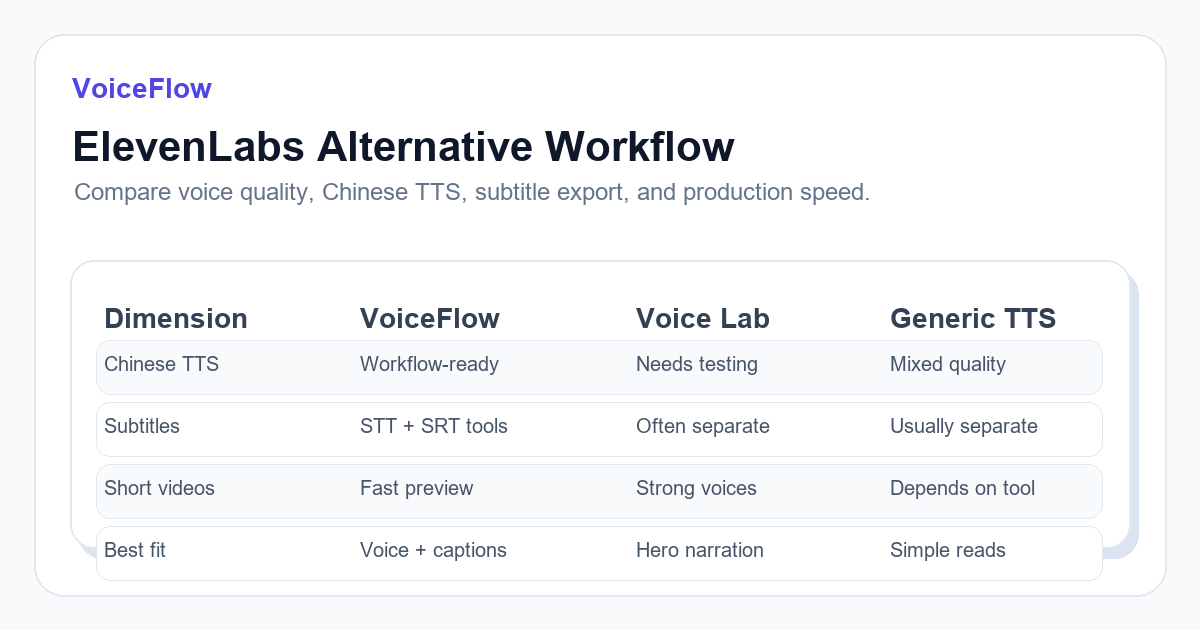
What to compare beyond voice quality
Voice quality matters, but overseas creators usually lose time in the steps around generation: script timing, pronunciation checks, subtitle export, and file handoff to editing software.
A practical comparison should include supported languages, voice style control, download formats, subtitle support, browser performance, and whether the same workspace can also handle transcription.
- Chinese and multilingual pronunciation quality for names, numbers, and brand terms.
- Fast preview before generating a full narration file.
- Export options that match editing tools, especially MP3/WAV audio and SRT/VTT subtitles.
- A simple workflow for short-video scripts, not only long-form studio narration.
When VoiceIndex AI is a better fit
VoiceIndex AI is useful when you want a lightweight browser workspace for text-to-speech, speech-to-text, and subtitle-related tasks. It is especially practical when the deliverable is not only an audio file, but a package that may include transcript text, subtitles, and timing checks.
For example, a short-video creator can estimate script duration, generate voiceover, transcribe source audio, and prepare SRT files without moving through several unrelated tools.
When a dedicated voice lab still makes sense
If your main requirement is advanced voice cloning, actor-like control, or a large commercial voice library with detailed studio controls, a dedicated voice lab may still be the right tool. The tradeoff is that you may need extra software for subtitles, timing, and content repurposing.
For teams producing at scale, the best setup is often a combination: a premium voice generator for hero narration and a practical workflow tool for transcription, subtitles, and routine production.
Recommended decision path
Start with your final deliverable. If you need a clean MP3 voiceover only, compare voice realism and licensing. If you need voiceover plus subtitles, transcript cleanup, or video editing handoff, compare the whole workflow.
Run the same 100-word sample through each candidate. Include numbers, names, one long sentence, and one emotional sentence. For English narration, compare practical baselines such as Jenny AI Voice, Christopher AI Voice, and Andrew DragonHD AI Voice before deciding whether a studio voice lab is necessary. This small test reveals more than polished demos.
Related voice workflows
Use these entry points when you want to test the advice in this guide with a real script and compare voices by production scenario.
Ready to try it? Use VoiceIndex AI to keep voice, subtitles, and audio workflow closer together.
Estimate a script before voiceoverFAQ
What is the best ElevenLabs alternative for Chinese voiceovers?
The best choice depends on whether you need studio-level voice control or a faster production workflow. For Chinese narration plus subtitle and transcription tasks, VoiceIndex AI is designed to keep more of the workflow in one browser workspace.
Should I use one tool for voice and another for subtitles?
You can, but it adds handoff time. If your publishing workflow always needs SRT or transcript output, choose a toolchain that handles subtitles early rather than after editing is finished.